“Look, Here Is the Lamb of God”Second Sunday after Epiphany
Text: John 1:29–43
Today we celebrate the Second Sunday of Epiphany, and to me this Sunday is special for at least two important reasons.
First, this is a Sunday of transition—of radical changes. John the Baptist has been around for a while now. He has drawn crowds, stirred hope, and raised expectations. Some were even asking whether he might be the one who was to come. But in today’s Gospel, John makes things unmistakably clear. Pointing at Jesus, he declares: “Here is the Lamb of God who takes away the sin of the world.” In other words, He is the one you must follow—not me.
Right here, we witness a powerful transition—from John to Jesus, from the forerunner to the fulfillment. John himself explains this shift when he says: “I came baptizing with water for this reason, that he might be revealed to Israel… He on whom you see the Spirit descend and remain is the one who baptizes with the Holy Spirit.” This marks another radical change: from a baptism of repentance to the baptism of the Holy Spirit—from preparation to fulfillment.
And then we see yet another transition. Andrew and the other disciple—who many believe is John the disciple—leave John the Baptist and begin following Jesus, the new teacher, the true Messiah. All these transitions happen after one simple but bold act: “John watched Jesus walk by and exclaimed—pointing at him— ‘Look, here is the Lamb of God!’” Everything changes after John dared to testify.
The second reason this is a special Sunday is that it sets the foundation of who Jesus is. John the Baptist does not introduce Jesus as the Lion of Judah, nor as a political revolutionary or mighty warrior as many expected the Messiah to be. Instead, he calls Him—twice— “the Lamb of God.” This is not accidental, this is not poetic exaggeration, this is not John’s personal invention. This is the message God sent him to proclaim.
John the Evangelist records these words to make something unmistakably clear: Jesus did not come as the long-awaited warrior-king who would destroy Israel’s political enemies, as many hoped. He came as a pure, sacrificial Lamb. A lamb that takes away the sin of the world.
Every Jew who heard John saying that would immediately think of Israel’s sacrificial system—especially Leviticus 4 and 16, where lambs are central to atonement for sin, or in the night of the Exodus, when each Israelite household was commanded to sacrifice a lamb without blemish, and mark their doorposts with its blood. By calling Jesus the Lamb of God, John is proclaiming that Jesus is God’s final and perfect answer to sin—not for one person, not for one family, not even for one nation, but for the world.
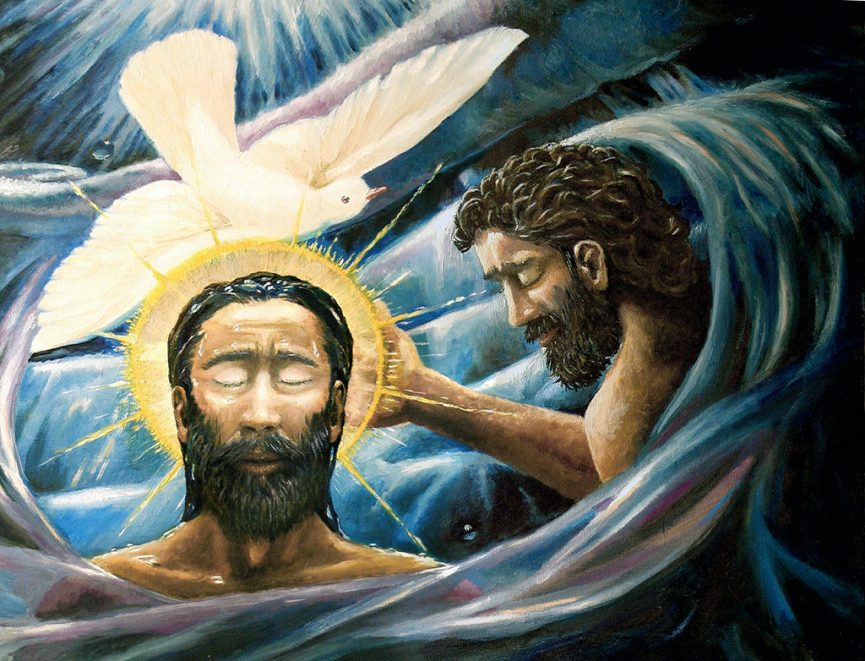
It is essential to notice what John the Evangelist tells us in verses 32–34: “I saw the Spirit come down from heaven in the form of a dove and rest on him… The God who sent me to baptize with water told me… ‘This is the one.’ I have seen it, and I testify that this is the Son of God.”
God gave John the Baptist the key—the revelation others needed to hear to recognize Jesus as the Massiah. And what did John do with that knowledge? He shared it. During the process of sharing, John gave up everything: his popularity, his disciples, his influence and eventually, his life
According to the Gospel of John, John the Baptizer provided the first two disciples to Jesus. Those two became four, then twelve, and today we are counted by millions, and everything began with one man who dared to testify—one man who refused to keep for himself what God had revealed to him.
Alongside John the Baptist, Andrew gives us another powerful example of testifying. Verse 41 tells us: “The first thing Andrew did was to find his brother Simon and say to him, ‘We have found the Messiah.’” Andrew did not preach a sermon, he did not argue theology, he simply shared what he had discovered—and brought his brother to Jesus. Evangelism often begins not with crowds, but with family, friends, and ordinary relationships.
My brothers and sisters, I do not say this to place a heavy burden on you. I do not want to put pressure on you. But just as God gave John the Baptist the key for other to come to Jesus, God has given us the key as well. That key is the Gospel of Jesus Christ. And I do not exaggerate when I say that this Gospel has the power to transform not only individuals, but families, communities, and even nations. I know this is true because: my life changed after I encountered Jesus; my family is better because we walk with Jesus; my world is better because I walk with Jesus; and what He has done in our lives, He is willing to do in the lives of others.
But remember, Jesus did not simply appear in our lives out of nowhere. Someone introduced us to him; someone spoke to us about him.
It is no secret that evil, in all its forms, is growing in our communities and destroying families. Today, sin is often even celebrated; and living according to the Gospel is considered immoral unpatriotic and subversive. Paul described what we are living right now around the year 57, in his letter to the Romans, chapter 1 verses 28 to 32, where he describes a society that did not think it worthwhile to retain the knowledge of God. He wrote “They not only continue to do these very things but also approve of those who practice them.”
The Church of Jesus has been facing this struggle between Evil and Good for over two thousand years and for testifying of Jesus and his message, thousand gave their life for defending what was just before God. Now it is our turn to continue testifying of Jesus The Lamb of God. But remember, we do not fight evil with weapons. We do not fight evil with fear. We fight evil with the Good News—with the name that is above every name.
Silence, -sisters and brothers- implies consent. When it comes to our relationship with Jesus, our calling is simple: to see and to share. See and speak up.
John saw the Spirit descend and told others. Andrew found the Messiah and brought his brother. Evangelism is noticing what God is doing in your life and inviting someone else to come and see for themselves.
I will finish with a story I once heard. At the end of World War II, when the Allies declared victory in Europe, celebrations erupted across cities. Bells rang, flags waved, and people poured into the streets rejoicing. But not everyone heard the news at the same time.
In some remote villages and isolated military outposts, soldiers and civilians continued living as if the war were still raging. Supplies were rationed. Fear remained. Some people kept hiding, some kept fighting, and some even lost their lives—not because the war was still going on, but because they did not yet know it was over. The victory had already been won. Peace had already been declared. But until the message arrived, people continued living in fear and death.
My brothers and sisters, the same is true spiritually. Jesus has already defeated sin and death. The Lamb of God has already taken away the sin of the world. The victory has already been declared. But if we do not share this good news, people will keep fighting battles they do not need to fight. They will keep living under guilt, fear, and bondage—not because Christ has not won, but because they have not heard yet.
Remember someone once told us the good news. Someone pointed us to Jesus. Someone said, “I have found the Messiah.” Now it is our turn. If we stay silent, people will keep suffering in a war that is already won and over. But if we testify—like John the Baptist and Andrew—others can finally hear the good news: The Lamb of God has won. And His victory can be theirs. Amen.